

Most people do not start with a trekking plan; they start with an image. It might be a shot of Mount Everest catching first light, or a quiet moment somewhere along the Annapurna region where the mountains feel impossibly close. And the reaction is almost always the same: that looks unreal…but that’s not for me. Because the second you move past the image, the numbers show up.
4,000 meters. 5,000 meters. Oxygen levels drop by nearly 40 to 50% compared to sea level. Treks that take 10 to 14 days, with back-to-back walking, basic accommodation, and no easy exit once you are deep in. And suddenly, it stops being a visual fantasy and starts sounding like something that requires experience, training, maybe even a different kind of person.
That is where the real question begins, not “is it beautiful?” but “can I actually handle that?”
And what makes this question tricky is that high altitude trekking in Nepal is not extreme in the way people imagine. But, it is also not casual. You are not climbing technical peaks, but you are spending days above 3,500 meters, where your body is under constant, measurable stress.
Studies across Himalayan trekking routes consistently show that roughly 1 in 3 trekkers experience some form of altitude sickness above 3,000 meters. That is not rare; it is normal. So the doubt is not irrational. It is informed. But here is where things get interesting: every year, a huge percentage of people standing at places like Everest Base Camp or high passes in the Annapurna region are not elite trekkers.
They are first-timers. No prior altitude experience. No extreme training background. Just people who prepared just enough and approached it the right way. This creates a tension that is hard to ignore. If the environment is genuinely demanding, and it is, then why are so many beginners able to do it?
That gap between perceived difficulty and actual experience is where most of the confusion lives. And if you can understand that gap properly, not oversimplify it, not exaggerate it, you stop treating high altitude trekking like a reckless gamble…and start seeing it for what it really is: a controlled challenge that rewards the people who respect it.
What Counts as “High Altitude” in Nepal?
“High altitude” in Nepal is not some distant milestone you eventually reach; it sneaks up on you early and then refuses to let go. Most trekkers land in Kathmandu at around 1,400 meters, already higher than many cities in the world. From there, it does not take long before your body starts entering unfamiliar territory.
Fly into Lukla (2,860m) for the Everest region, and you have skipped straight into what scientists classify as high altitude in under 40 minutes. No warm-up, no gradual build, just thinner air and a body that’s trying to catch up.
Here’s how altitude is actually categorized in trekking terms:
- 2,500m to 3,500m (High Altitude):
This is where changes begin. Oxygen levels are roughly 25% lower than at sea level. You might not feel “sick,” but you’ll notice things: slightly heavier breathing, reduced stamina, and sleep that feels a bit off.
- 3,500m to 5,500m (Very High Altitude):
Now it gets real. Oxygen drops to nearly 60 to 65% of what your body is used to. This is the zone where most classic Nepal treks live. Think Namche Bazaar (3,440m), Dingboche (4,410m), or Manang (3,519m) in the Annapurna region. Acclimatization days are not “rest days” here; they are a survival strategy.
- Above 5,500m (Extreme Altitude):
This is where your body is constantly under stress. Places like Everest Base Camp (5,364m) or Thorong La Pass (5,416m) sit right on the edge of what most trekkers will ever experience. Oxygen availability drops to nearly half of sea level. You are walking more slowly, drinking more, thinking about your breathing without even trying.
Now here’s what makes Nepal uniquely deceptive: the speed of ascent. On paper, a trek like Everest Base Camp takes 12 to 14 days. Sounds reasonable. But within just 2 to 3 days, you are already sleeping above 3,000 meters. By day five or six, you are flirting with 4,000+. That is a faster vertical gain than most mountain systems allow, and it is exactly why altitude sickness becomes the defining challenge, not distance, not terrain.
And here’s the part most beginners do not expect: altitude does not care how fit you are. You could run marathons at sea level and still struggle at 3,500 meters. There is actual data behind this. Studies show AMS (Acute Mountain Sickness) affects up to 25 to 40% of trekkers above 3,000 meters in Nepal, regardless of fitness level. That is not a small risk; it is a shared experience.
So when we say “high altitude trekking in Nepal,” we are not talking about a dramatic summit push reserved for experts. We are talking about multi-day journeys where your body is constantly negotiating with thinner air, adapting step by step, night by night. And that shift, from hiking on land to functioning at altitude, is the real challenge beginners are stepping into.
Can Beginners Actually Do It?
Short answer? Yes. Real answer? Yes, but only if you stop thinking of it like a normal hike.
This is where most beginners get it wrong. They imagine high altitude trekking in Nepal as a more “intense” version of a hill walk, longer days, steeper climbs, maybe a bit more fatigue.
But altitude does not scale like that. It changes the rules entirely. At 4,000 meters, you are not just burning energy; you are operating with roughly 40% less oxygen than your body is used to. That’s not a fitness problem; that’s a physiological constraint.
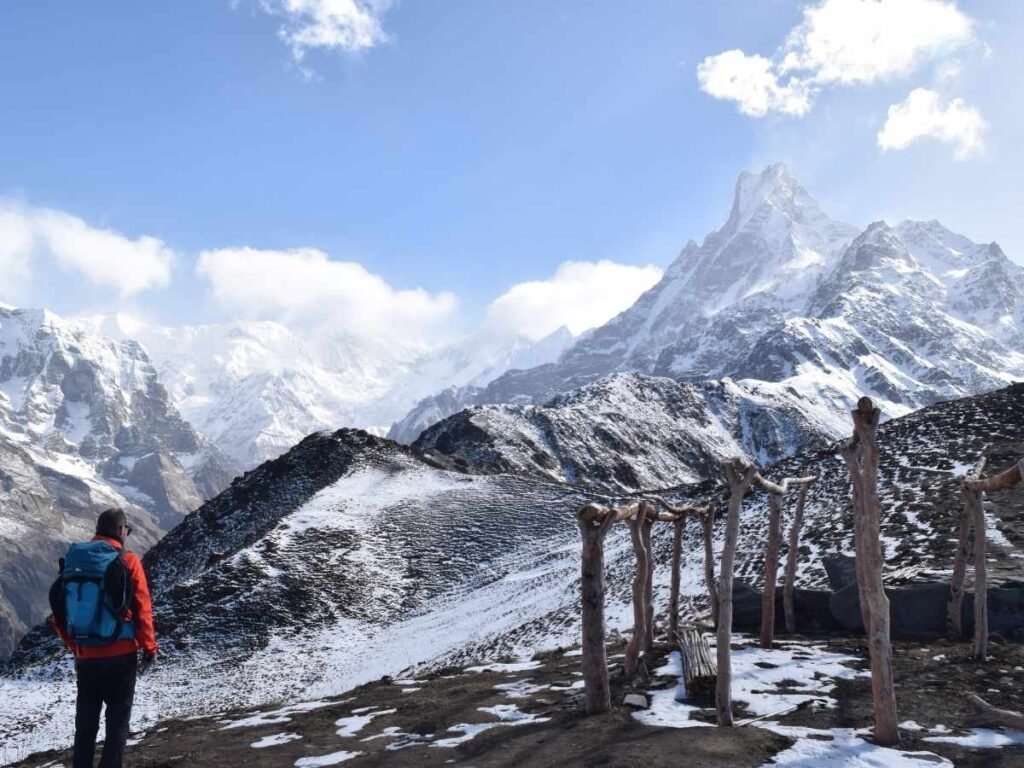
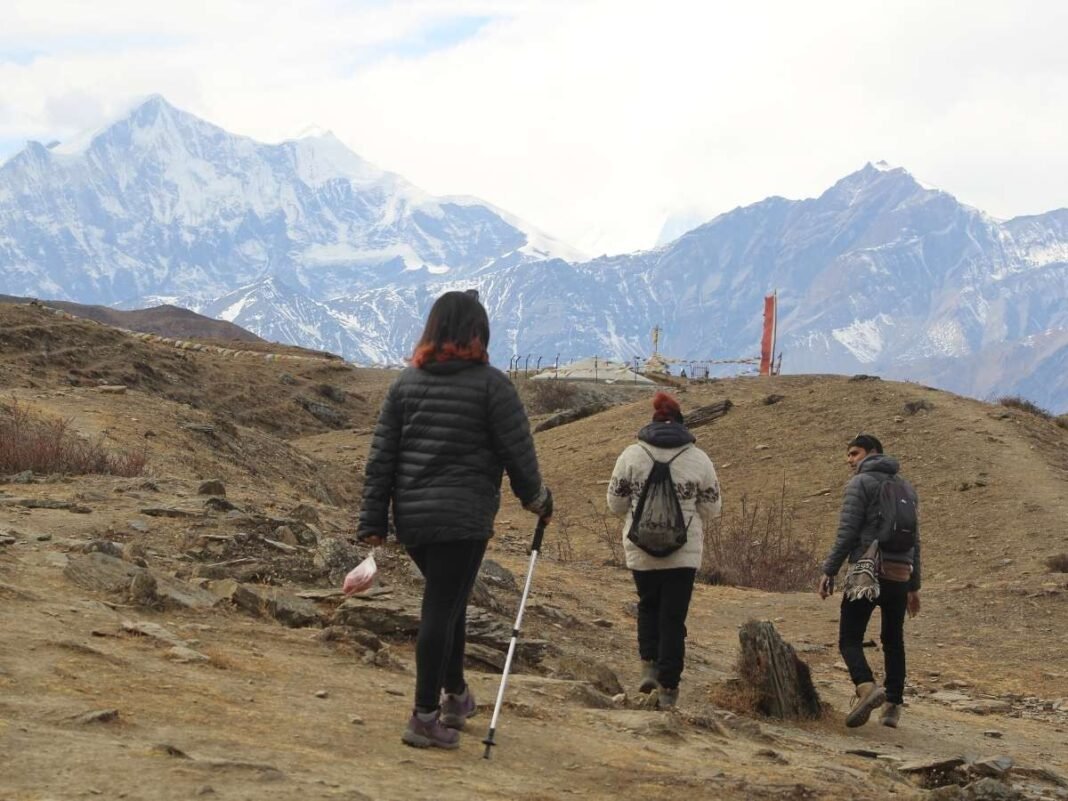
And yet, every year, thousands of first-time trekkers make it to places like Everest Base Camp or cross Thorong La Pass without any prior high-altitude experience. So what is really going on? The people who succeed are not the strongest; they are the ones who adapt. They walk slower than they think they should.
They take acclimatization seriously instead of treating it like an optional add-on. They listen to their bodies in a way most people never have to at lower elevations. In fact, if you look at how trekking days are structured in Nepal, it almost feels counterintuitive: short distances, slow pace, frequent breaks. Some days are just 4 to 6 hours of walking, not because the terrain is easy, but because your body simply cannot rush altitude.
There is also a psychological shift that happens up there. At lower elevations, progress feels linear; the faster you go, the sooner you arrive. At altitude, pushing harder often backfires. You do not “win” by being fast; you win by being consistent. It is less about strength and more about restraint, patience, and reading subtle signals, like a mild headache, loss of appetite, or unusual fatigue.
And here is the nuance beginners rarely hear: being a beginner can actually work in your favor. You don’t have an ego tied to speed. You are more likely to follow the itinerary properly, take advice from guides, and respect the process. Ironically, experienced hikers sometimes struggle more because they try to apply low-altitude habits in a high-altitude environment.
But let’s not romanticize it either. This is not something you casually show up for. If you ignore acclimatization, rush your itinerary, or treat symptoms lightly, altitude will shut you down fast. That is why success rates vary so much depending on how people approach the trek, not just who they are. So can beginners do it? Absolutely. But not by overpowering the mountain. They can do it by adjusting to it.
Best High Altitude Treks for Beginners
If altitude is the real challenge, not distance, not terrain, then choosing the right trek becomes less about chasing famous names and more about how intelligently the route lets your body adapt. Because here is the truth, most first-timers don’t hear early enough: not all high altitude treks in Nepal are built the same.
Some throw you up too fast, some stretch you too long, and a few are quietly designed in a way that gives beginners a genuine fighting chance. Take the Everest Base Camp trek. On paper, it sounds like the ultimate beginner mistake, high, cold, and globally iconic. But structurally, it is actually one of the more forgiving high-altitude experiences if done properly.
The route forces acclimatization through built-in rest days at Namche Bazaar (3,440m) and Dingboche (4,410m), and the daily elevation gain is relatively controlled. You are not sprinting to 5,000 meters; you are gradually negotiating your way there. That is why, despite its reputation, a huge percentage of first-time trekkers attempt this route every year.
Now compare that to the Annapurna Circuit. This one plays a longer game. Instead of flying straight into high altitude, you start lower and spend days, sometimes a week, working your way up through villages, forests, and shifting landscapes before crossing Thorong La Pass (5,416m). That extended buildup dramatically improves acclimatization, which is why many consider it one of the safest ways for beginners to experience extreme altitude. The trade-off? It is longer, and the commitment is bigger.
Then there is the Langtang Valley Trek, often overlooked, but arguably one of the smartest choices for beginners, testing their limits. It climbs high (Kyanjin Ri sits around 4,700m), but the pace is gentler, the logistics simpler, and the altitude exposure more flexible. You get a real taste of high altitude without immediately pushing into the extreme zone.
And if you want something that feels like a controlled introduction rather than a full commitment, routes in the Annapurna Base Camp region offer a different kind of experience. You still reach over 4,000 meters, but the ascent profile is less aggressive, and the trek combines altitude with relatively comfortable infrastructure. It is not “easy,” but it is more forgiving if you are unsure how your body will respond.
What ties all of these together is not just popularity; it is how they manage altitude gain. Gradual climbs, built-in acclimatization days, and well-established teahouse networks create a safety net that beginners can rely on. That does not remove the challenge, but it makes it manageable.
Because at the end of the day, the “best” high altitude trek for a beginner is not the one with the best views or the biggest name. It is the one that gives your body enough time to catch up with your ambition, and in Nepal, a few routes do that far better than others.
How Beginners Can Prepare (Without Overtraining)
Most beginners swing between two extremes before a high-altitude trek in Nepal: either they do almost nothing and hope for the best, or they try to “train like an athlete” and burn out before the trip even begins. The reality sits somewhere much more practical and is far less dramatic.
You do not need elite fitness to trek in the Himalayas. But you do need a body that is comfortable with moving for multiple days in a row, and a mindset that understands this is not about intensity, it is about consistency under stress.
Physical Preparation
Start with the physical side, but keep it honest. What actually helps is simple: long walks, light hikes, and building basic endurance. If you can walk 5 to 7 hours a day with a small pack for several consecutive days, you are already in a good place. Not fast, not aggressively, just steady.
Stairs help. Inclines help. But you are not training to sprint uphill; you are training your body to keep going without falling apart on day four. That is where most beginners struggle, not on the hardest climb, but on the accumulation of effort.
Acclimatization Literacy
Then comes the part people underestimate: acclimatization literacy. Understanding how your body adapts to altitude is more valuable than adding another workout session. At higher elevations, your body needs time to adjust to reduced oxygen, producing more red blood cells, changing breathing patterns, and recalibrating how it uses energy.
This does not happen in a gym. It happens on the trail, over days. That is why strategies like gradual ascent and rest days are not “nice to have”; they are non-negotiable. A well-planned itinerary with proper acclimatization can make a bigger difference than months of physical training.
Pack Lightly
Gear is another place where beginners either overdo it or get it wrong entirely. You do not need the most expensive setup, but you do need the right setup. Layers that adapt to changing temperatures, a comfortable pair of broken-in boots, and a pack that does not punish your shoulders after five hours; these matter more than brand names.
And the biggest mistake? Carrying too much. Every extra kilogram feels heavier at 4,000 meters. Most experienced trekkers will tell you the same thing: pack less than you think you need, and you will thank yourself every single day.
Pick the Right Season
Timing also plays a bigger role than people expect. Trekking during stable seasons, spring (March to May) and autumn (September to November), does not just give you better views; it reduces environmental stress. Clear weather, predictable temperatures, and safer trail conditions mean your body is dealing with one major challenge (altitude) instead of several at once.
Learn to Manage Your Expectations
And finally, there is preparation that doesn’t show up on a checklist: expectation management. You won’t feel strong every day. Some mornings will start with low energy, poor sleep, or a mild headache. That doesn’t mean you are failing; it means your body is adapting.
Beginners who succeed are the ones who don’t panic at every discomfort, but also do not ignore warning signs. They stay flexible, adjust pace, hydrate properly, and accept that progress at altitude is rarely linear.
So no, you don’t need to overtrain for a high-altitude trek in Nepal. But you do need to prepare in a way that matches the reality of the experience, not the fantasy of it. And that preparation is less about pushing harder and more about understanding what actually matters when the air gets thin.
Common Mistakes First-Time Trekkers Make
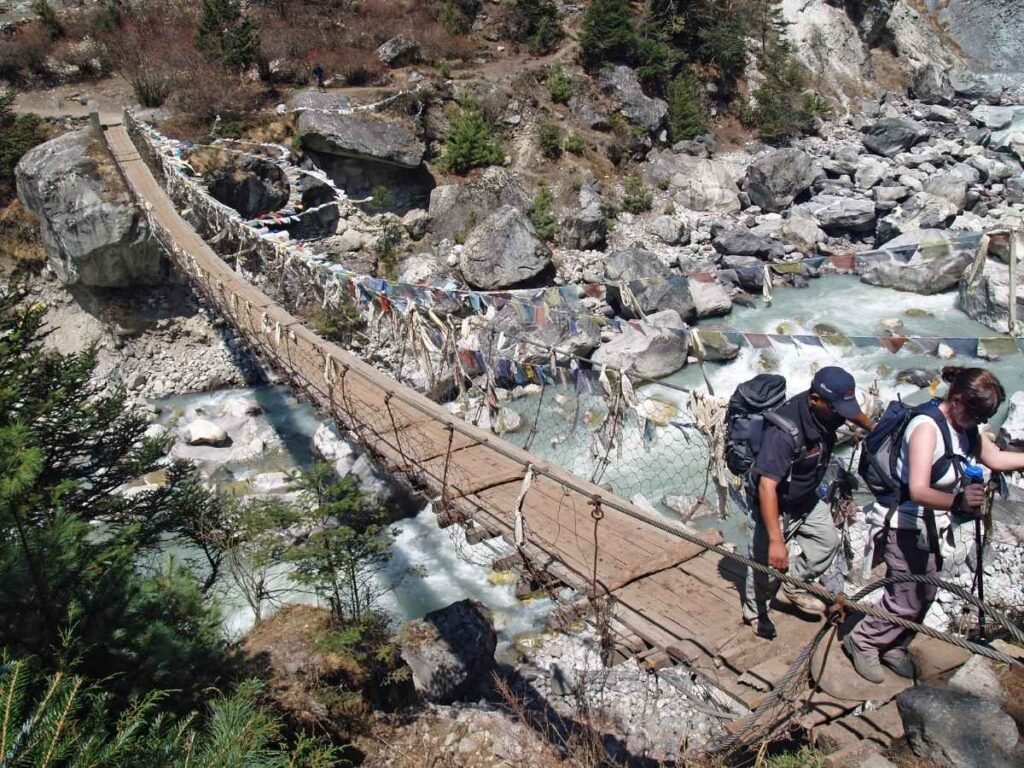
Most first-time trekkers don’t fail because the mountain is “too hard.” They struggle because they bring the wrong assumptions into an environment that does not forgive them. And the tricky part? These mistakes do not feel like mistakes when you are making them. They feel logical, even confident, until altitude quietly proves otherwise.
Underestimating Altitude
The most common one is treating altitude like distance. At lower elevations, if you feel good, you go faster, walk longer, and push a bit harder. That logic breaks down completely above 3,000 meters. In places like Namche Bazaar or Manang, beginners often feel strong on arrival and assume they are “adapting well.”
So they skip acclimatization walks, cut rest days short, or move higher too quickly. What follows is predictable: headaches, poor sleep, loss of appetite, and, in many cases, a forced descent. The mistake is not going too slow; it is not respecting how delayed altitude symptoms can be.
Ignoring AMS Symptoms
Closely tied to underestimating altitude is ignoring early signs of altitude sickness. AMS does not usually hit like a dramatic collapse; it starts quietly. A mild headache. Slight nausea. Feeling unusually tired. Beginners often brush this off as dehydration or a “bad day,” especially when everyone around them is still moving.
But data from Himalayan trekking routes shows that a significant portion of serious altitude cases started as mild symptoms that were ignored for 24 to 48 hours. At altitude, what you ignore does not disappear; it compounds.
Overpacking
Then there’s the classic: overpacking. It sounds harmless at the start, but by the time you’re climbing above 4,000 meters, every extra kilo becomes a tax on your energy. That “just in case” jacket, extra gadget, or unnecessary clothing layer starts to feel like a bad decision with every step.
At sea level, weight is manageable. At altitude, it is amplified. The difference between a 6kg pack and a 10kg pack is not just comfort; it is endurance over multiple days.
Unchecked Pace
Another subtle but costly mistake is chasing pace instead of rhythm. Beginners often compare themselves to others on the trail, especially faster trekkers or seasoned hikers, and try to match that speed. But altitude punishes inconsistency.
Walk too fast, and you spike your heart rate in an oxygen-limited environment. That leads to quicker fatigue, heavier breathing, and sometimes even worsened symptoms. Experienced trekkers are not necessarily stronger; they are just better at holding a steady, sustainable pace for hours.
Ignoring Hydration
Hydration is another area where things quietly go wrong. Cold weather suppresses thirst, so beginners end up drinking far less than they should. But at altitude, your body loses more fluid through faster breathing and dry air.
Combine that with long walking days, and mild dehydration becomes almost inevitable, making altitude symptoms feel worse than they actually are. It is not uncommon for trekkers to drink under 2 liters a day when they should be closer to 3 to 4 liters in higher zones.
Unnecessary Stress
And finally, there is a mental mistake that does not get talked about enough: expecting every day to feel strong. High altitude trekking is not a steady upward climb in performance. Some days you will feel great, others you will feel slow, heavy, or slightly off.
Beginners often interpret a “bad day” as a sign they are not cut out for it, which leads to poor decisions, rushing to “make up time,” stressing unnecessarily, or losing confidence at the wrong moment. In reality, fluctuation is normal. Even experienced trekkers have off days above 4,000 meters.
What ties all of these mistakes together is a single pattern: applying low-altitude logic to a high-altitude environment. And the shift beginners need to make is not dramatic; it is subtle.
Slow down more than you think you should. Pay attention to small signals before they become big problems. Value consistency over performance.
Because up there, it is not the strongest trekkers who struggle the most, it is the ones who assume the rules have not changed.
Final Verdict: Is It Worth It for Beginners?
So, after all the caution, the physiology, the slow pacing, the uncomfortable nights, and the constant negotiation with thinner air, does it actually make sense for a beginner to step into high altitude trekking in Nepal? Yes. But not for the reasons most people think.
If you are chasing a clean, comfortable adventure where effort directly translates into reward, this probably is not it. High altitude trekking is uneven. Some days feel incredible, clear skies, vast Himalayan views, that quiet satisfaction of moving through landscapes that don’t feel real. Other days feel frustratingly slow, physically off, even a bit discouraging. And that contrast is the experience.
What makes it worth it is not just reaching places like Everest Base Camp or standing at Thorong La Pass. It is the shift that happens along the way. You start the trek thinking in terms of distance and difficulty, but somewhere above 3,500 meters, your priorities change. You begin to notice your breathing, your pace, your energy in a way you never had to before. Progress becomes quieter, more internal.
And that is exactly why beginners often come out of these treks with something deeper than just photos. Because you do not “conquer” high altitude. You learn how to exist in it, patiently, carefully, sometimes uncomfortably. You learn when to push and when to stop. You learn that strength is not always about going harder; sometimes it is about holding back.
Of course, it is not for everyone. If you are unwilling to slow down, to listen to your body, or to accept that plans might change mid-trek, the experience can turn quickly from rewarding to risky. But if you approach it with the right mindset, curious, prepared, and flexible, then being a beginner is not a disadvantage.
It is actually the perfect place to start. Because in Nepal, high-altitude trekking is not reserved for experts. It is reserved for those willing to adapt. And if you can do that, then yes, it is absolutely worth it.